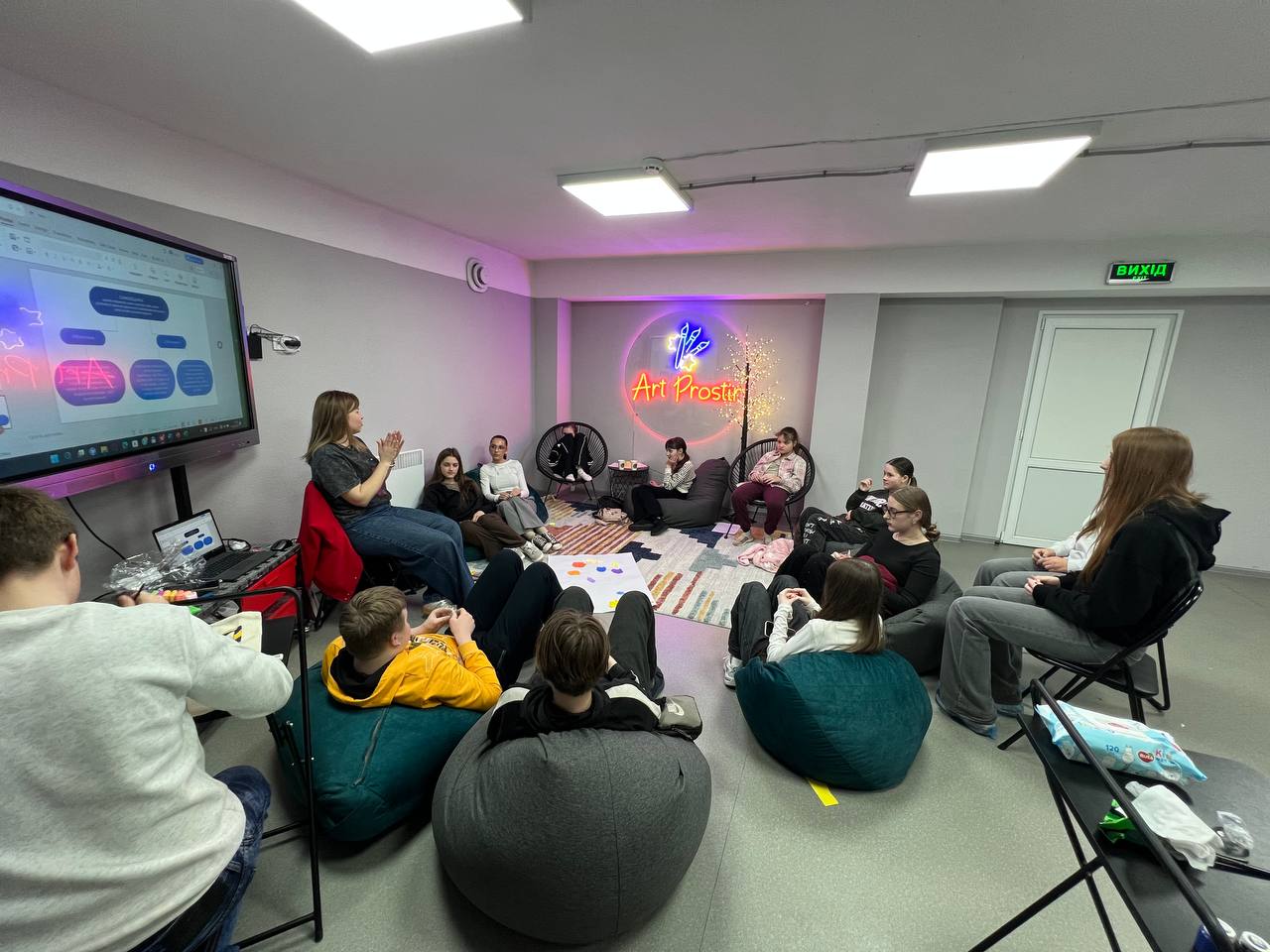
How do you turn an ordinary room into a space where teenagers forget about their anxieties, put away their phones, and start speaking sincerely about their dreams? We found the answer in Dergachi and Kharkiv, where our “Teen`s Club” operated for a month.
These were not traditional lessons or lectures. These were 16 meetings filled with creative chaos, the scent of paint for tote bags, loud music, and deep conversations with psychologists. Our goal was to help children break free from the “online confinement” forced upon them by the war and years of remote learning — and the results exceeded all expectations.
65 participants instead of the planned 40 is the best proof of how much young people crave face-to-face communication. Today, we are sharing three stories of how one month at the club helped girls find inner strength and discover new talents.
Margarita: the power of openness
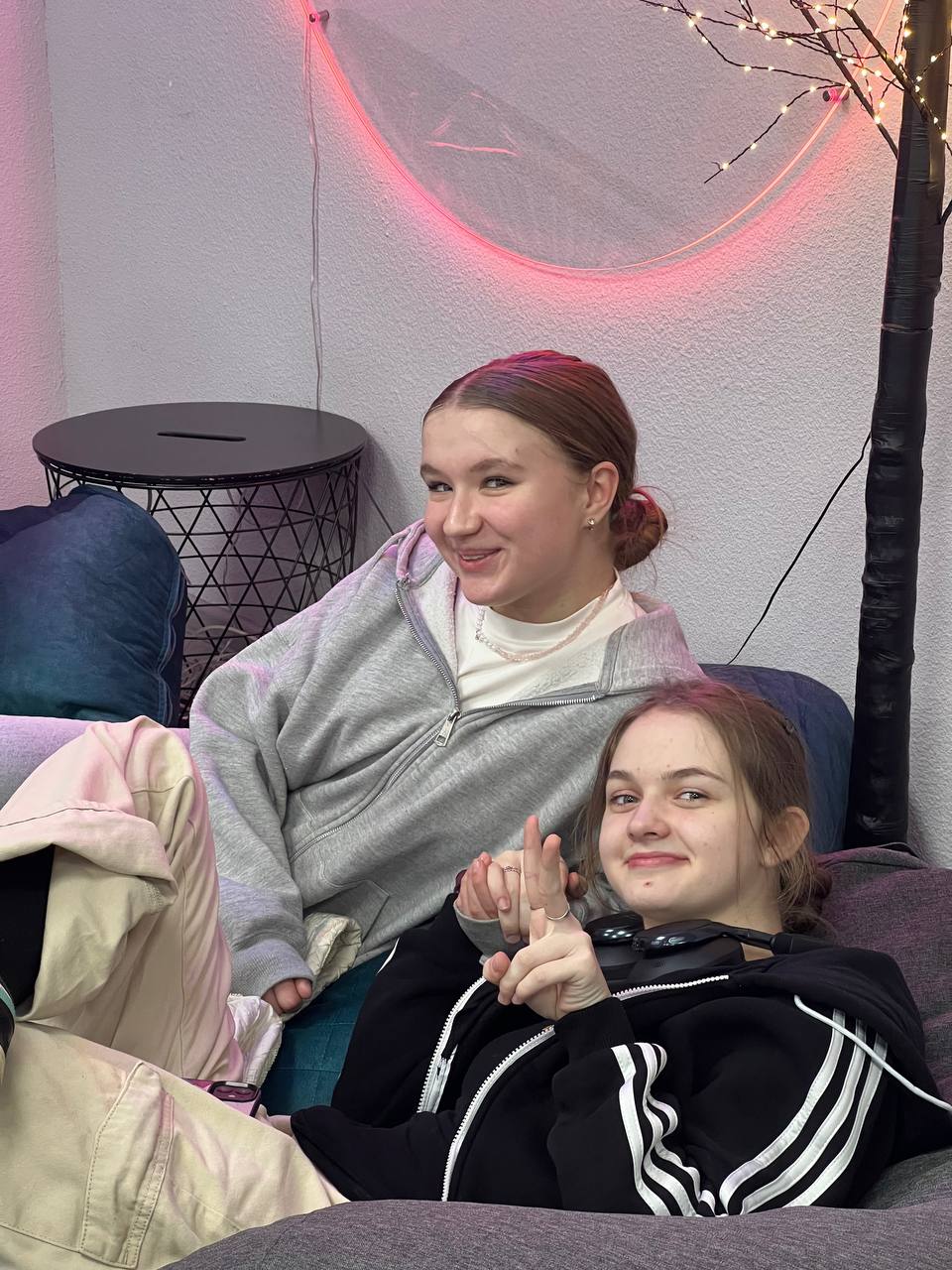
For 14-year-old Margarita, communication was the biggest challenge. A large number of new people caused her anxiety and a desire to remain invisible. However, the art therapy format — painting tote bags and listening to music together — helped her “open up.”
The Result: Margarita attended 8 sessions and is now one of the most active participants in discussions.
“It has become much easier for me to carry on conversations. Here, you are not judged, and that gives you the strength to speak out.”
Katya: new version of herself
15-year-old Katya considered herself a staunch introvert. Because of the war, her social circle had almost disappeared. She joined the club at her mother’s initiative, without having any expectations.
The Result: Through emotional regulation techniques and group exercises, Katya realized that her withdrawal was merely a defensive reaction to stress.
“This project showed me that I can actually be a social person. I am very happy that I left the house.”
A comment from the project`s Psychologist:
“Teenagers are very sincere and outspoken. If they trust you, they talk about truly deep things, and it’s vital to know how to listen to them. I try to create a safe space where they can open up without fear of judgment — an experience they then carry into their real lives.
In our sessions, we teach teenagers to be honest with themselves: to allow themselves to feel different emotions, to understand them, and, most importantly, to know how to process them correctly. I am very grateful to the project for the opportunity to work with these children. They are all different, but their readiness for new acquaintances and their sincerity bring great satisfaction to the work. My main advice to the participants is: do not be afraid to open up, because that is how people appear in your life who stay with you for a long time.”